Aleksey Chernobelskiy
•February 2, 2024
My deal is distressed, now what?
My thoughts on both GPs and LPs facing challenges
*Welcome to the **142 *subscribers and 6 premium subscribers who joined since the last issue!
Last premium posts: Is my investment distressed? & Losing it all in foreclosure
Last free post: LP Investing Digest #14
Announcements:
🎙️New podcast up - discussed my background, the start of my new venture, Twitter's involvement, and much more! As always, my podcast appearances are not an endorsement of the host
**Referral reminder: **if you’re on a budget, you can get up to 6 months for free of these articles by inviting 6 friends to this publication!
If you just joined: I write twice per week and you’ll receive those emails as I post them. One article is always premium (such as this one), while the other is a free weekly digest on LP topics that might be helpful to you. If you’d like to upgrade to premium (which includes access to full archive of my articles), you can do so here:
My deal is distressed, now what?
Welcome back! 👋
The entire point of our discussion last week was to figure out how to spot distress in investments before it’s too late. Today, we’ll turn to what you can do about it.
As a reminder, this is the second part of a two weeks series based on what I’ve seen in the distressed world**:**
That’s our topic for today - how to spot things before it’s too late
This week: My deal is distressed, now what?
Once you know there is a challenge coming, what do you do? I’ll break this down for both GPs and LPs separately
I highly recommend reading last week’s post before you continue. There’s a preface in there that’s very relevant to today’s discussion.
We’ll cover 2 topics today:
Facing distress as a GP
Facing distress as an LP
Although I divide the answers up for both a GP and an LP, I highly recommend reading both regardless of which party you are.
At the end of the day this is a partnership and the best way to get better is to understand the other side’s perspective.
**1) **Facing distress as a GP
Once you've realized that one of your investments is facing distress, the most important thing to do is figure out the entirety of your options and how much time you have. Let’s touch on both options and time:
Options:
This is really important because many people think that the only option is issuing a capital call. On the flip side, some are scared to issue a capital call but instead go get external capital at a much higher cost to LPs without notifying the LP.
I hope it is clear why both of these routes are misguided - the goal should always do what’s best for the investors, not what’s easiest (or what avoids people getting frustrated with you etc)
Here’s a list of options, although this is certainly not exhaustive:
Existing Investors
Raise equity capital from existing investors
Raise other forms of capital from existing investors, including loans, mezzanine debt, or preferred equity - all of these would typically come before the common equity in the waterfall
New Investors
Mezzanine debt
Preferred equity or rescue capital
Other
The GP entity might have rights to loan an amount of money to a given deal based on your documents, this is an incredible show of commitment to LPs (assuming there’s transparency and the terms are market… and if you subordinate the note to LP equity from a waterfall perspective, extra kudos to you!)
You might be able to able to find a lender who would lend you money (that you can then use) based on your promote in a given deal, or the promote(s) that the GP entity is entitled to as a whole
I’ll write a lot more on GP communication in a separate article specific to capital calls, but for now I’ll just say the following:
If you’re going to make a capital call (or alert the investors on any important decision) make sure you are clear on why this decision is best for them
I find that this explanation is almost never included, while being an incredible opportunity to build trust since the LP sees how much thought you’ve put into the final plan - the LP might be silent, but they’re still a partner!
Finally, if the plan is a capital call, don’t forget to mention how (if at all) are you personally participating in the plan financially.
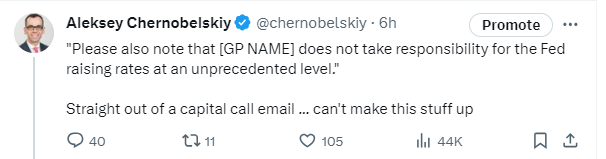
Take responsibility where it’s relevant to do so, and if you decide not to take responsibility (we can’t control everything, I get it) please don’t do the following..
Time:
How much time you have to make a decision is critical and often de prioritized. I’ve seen this personally at a syndicator GP .. and now I see the result of such procrastination from the perspective of an LP.
Real estate is an asset that is fairly illiquid and therefore anything you would like to do 3-6 months from now needs to be put in motion today and strategized 9-12 months prior to the execution date. The great thing about real estate is that it is fairly simple (from a capital stack perspective) and the decisions are few - so doing things last minute typically comes off as unprepared at best.
**2) **Facing distress as an LP
I'll divide this section into two parts:
You have a hunch that the property is in distress, but the GP has not said anything
The GP has communicated that there are challenges and you have to respond
You have a hunch that the property is in distress, but the GP has not said anything
Here, you need to proceed with a lot caution.
Firstly, you should recognize the fact that you might be wrong in your assumptions. Perhaps the property is actually not in distress and you made some mistakes in your calculations. Having said that, it's important to note that I have seen cases of GPs realizing that they are in a bind after an LP asks them a few pointed questions. Needless to say, this isn’t ideal… but things happen and that’s not our topic for today.
This brings us to the next point - even though your position as an LP is silent in nature and you're not in control of the investment, you should not feel that you're helpless and can’t impact what happens. As I said above, I've seen instances where an LP asking the right questions influenced the direction of the investment.
So, what do you do?
I think you first need to understand that the GP is busy and answering a lengthy question list might not be the top priority. Thus, you should try to prioritize your questions to a few that have the most impact to your overall understanding of the situation. In my opinion, those questions should come from an analysis that you did based on my article last week.
Lastly, proceed with grace. I know this is so obvious, but if you lead with anger or tension the counterparty is a lot less likely to listen to you. I don't mean to belittle the fact that you have capital at stake here, but don’t shoot yourself in the foot …
The GP has communicated that there are challenges and you have to respond
First, just remember that this is an investment decision, just like the one you made at the outset! Remember that when you originally made your investment you had data, models, and a thesis. Today things should not be any different - you should have everything you need to make a decision on whether investing more capital into this property is a good or bad financial (not emotional!) decision. Ask questions!
Perhaps you could even say that now that the GP has underperformed on their original investment thesis, you should actually expect more information than you originally had at the outset (or at least be more comfortable making a decision!). In other words, you now have a piece of information - the GP’s inability to execute / assess risk - that you did not have before. My or your opinion on who is to blame (and one option can be the Fed, sure) are irrelevant .. I am simply saying that you made an investment, and it’s not working out.
A corollary to the above is that the decision should NOT be based on fear of losing your original investment (I know it sucks, but it’s already made!) or the property going into foreclosure because you don’t contribute to the capital call (there are generally other sources of capital the GP can tap).
Finally, it's important to keep in mind that the alignment of interests may be in conflict in distressed situations.
I'm going to write about this at length in the coming weeks, but for now just consider the fact that (putting ethics aside) the LP’s goal in the middle of distress is to save their investment. In the meantime, the GP might be optimizing for their ability to stay in business (e.g. avoiding a default on a loan at all costs, avoiding press, etc). Note that these can be diametrically opposed, since staying in business for longer might mean selling you on something that doesn’t make financial sense (in the context of saving your original investment).
I'm not saying that this is always the case and ethics certainly play a role here, but it's important to keep this conflict of interest in mind when you read anything coming from the GP - at the end of the day, it's a sales pitch from someone who hasn't entirely delivered to date and your goal should be to avoid the following:

In terms of actually making a decision on a capital call, I recommend looking at my article from a few weeks ago that addresses the connection between your existing investment in the property and the marginal investment that you're about to make. There’s a model in there that helps illustrate how you should think about making such an investment decision. I will also write more about this in the coming weeks.
If you or anyone you know have gone through losing money through a syndication (I'd be happy to make both the LP and the GP anonymous) please reach out.
I'm hoping to make this year full of incredible content where we dive into real stories of both successful and failed investments. The goal is for you to learn from both of these, without putting any of your own principal at risk (until of course you feel ready to do so).
Thank you for reading! I genuinely hope you found this helpful - the best way to say thank you is to spread the word.
I have dozens of topics on my list for 2024 and I’m very excited. If you have a topic you’d like me to cover or have any questions on this article, please leave a comment.
I advise LPs on existing and potential positions and write articles here weekly on what I see in the marketplace that could help you invest better. You can find me on LinkedIn or Twitter.
Whether you’re an LP, want to learn to become one, or affiliated with LPs (GPs, Attorneys, CPAs, Financial Advisors) I hope you’ll consider subscribing and sharing this post to help others make more informed investment decisions.
When you’re ready, I could help you in 3 ways - simply reply to this email if one is of interest:
Limited Partners:
Potential positions - you’re considering investing and need an independent opinion
Existing positions - there’s a lack of communication, you’re concerned about fraud, or perhaps you got a capital call request and you’re not sure how to proceed. I have also helped LPs with a “post-mortem” analysis on deals that didn’t work out - it’s important to learn these lessons as opposed to just blaming the GP.
LP Course - review 4 separate memos together with me and other LPs to learn how to find good LP investments.
***LP Community - ***free 1,600+ member LP Investor community on Twitter
***Find GPs ***in unique asset classes/geographies on my monthly intro post (see LinkedIn’s post as well for more)
General Partners:
Deck review - I’ll look over your marketing materials from the perspective of an LP and provide slide by slide commentary to improve your pitch
Investment review - I’ll provide independent feedback on an opportunity you’re pursuing
Capital call advisory** - **you suspect that you’ll need to make a capital call, but aren’t sure how to proceed or communicate the message.
Other - anything from waterfall/fee advisory to disagreements between co-GPs on the proper path given a set of circumstances
General Consulting: modeling, strategic advisory, underwriting training, etc.
If you’d like to speak on the phone, you can set up an initial consultation.
Limited Partner (LP) Investing Lessons is a reader-supported publication. To receive new posts and support my work, consider becoming a free or paid subscriber.
Join GP-LP Match
Sign up, then tell Sloan, our concierge, what you invest in. Sloan brings you sponsors whose raises fit, and your identity stays private until you say yes.
Message SloanNo cut of the capital you deploy.