Aleksey Chernobelskiy • September 14, 2025
Anti-stock marketing tactics
The private vs. public mirage
Happy Sunday!
Some GPs market their deals by claiming they are a superior alternative to stocks. While private real estate investments can play a critical role in a diversified portfolio for most people, LPs should be cautious when a GP leans too heavily on comparisons to public markets (particularly when they’re presented in a deceptive matter).
Today, I’d like to go through all the methods I’ve seen to date so that you can be more cautious.
Announcements (article continued below):
**Conference: **I wanted to let you know that I'll be speaking at Reconvene in LA this coming Wednesday (9/17) in case you're attending or would like to.
The 60-minute off-the-record breakout session is titled "State of the Private Capital Market." Designed for sponsors and fund managers raising equity today and for allocators providing it, this session will offer a real-time look into what is getting funded, what is being passed over, and why. I will cover trends across asset classes, across markets, and across investment strategies.
Reconvene, now in its 5th year, is an "un-conference" hosted by Moses Kagan, bringing together two hundred thoughtful real estate operators, developers and investors for a few days of honest, off-the-record conversations about the opportunities and challenges in their businesses. This year's event will take place 9/16-9/18 in Santa Monica, CA.
To learn more about this paid conference, please complete the waitlist form.
🆕GP-LP Match has a new website, Twitter and LinkedIn page - I will be posting a lot more there for content related to the platform so please consider following along and sharing!
“The stock market is too volatile”
Public equities are volatile because prices are visible daily, not because they’re inherently riskier
Private markets look calmer only because assets aren’t traded frequently - but underlying values still change on a daily basis (you just don’t see it!)
In other words - illiquidity hides volatility and also makes it harder for LPs to exit when conditions worsen
As a quick caveat - many GPs are out there saying they have never lost any money, but on paper their LPs are sitting on substantial losses today. More on spotting distress here and this common “we haven’t lost money” tactic here
Here’s an example by the way - I am fortunate to get a lot of Google Ads like this :D
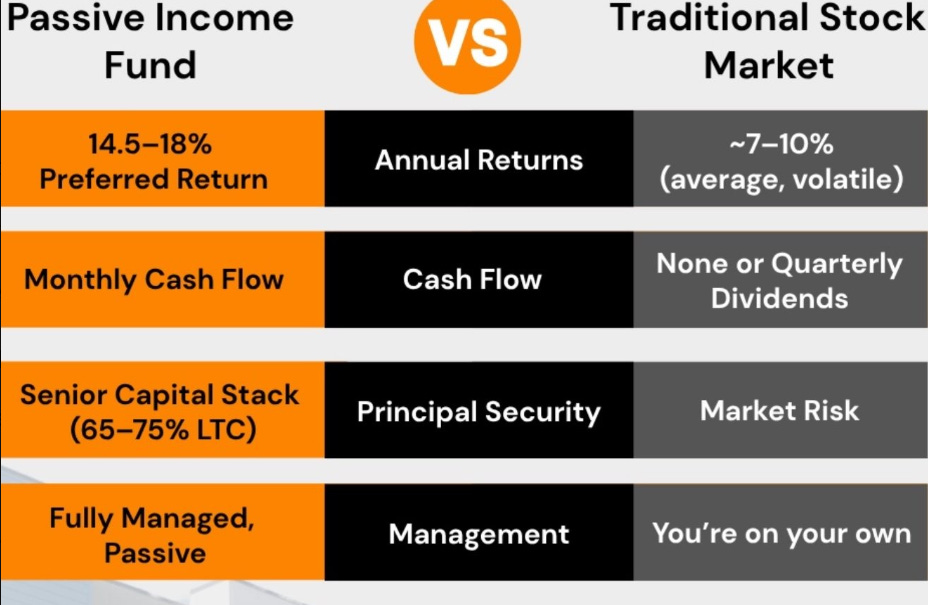
“Don’t be a sheep” / “unshackle yourself from your W-2” / “escape the rat race” arguments
I wish the counterarguments to these were obvious, nobody would fall for them, and GPs would use them - unfortunately none of these are practically true
These pitches appeal to ego and emotion rather than analysis, and I’ve shown (through a Monte Carlo simulation which I hope you’ll enjoy) why in the vast majority of cases this simply doesn’t work
To clarify, this marketing strategy is vastly different than the typical “we can help you grow your wealth” - I talk through about this in the above article in more detail, but in short
“The 401(k) is terrible / returns are too low”
Hard to know where to start here, other than the fact that a 401(k) is a tax-advantaged account that most Americans should be maxing out
While it’s true that one could generate higher returns than the average stock return in the short term, it’s hard to find an alternative that doesn’t carry more risk or has other disadvantages (e.g. illiquidity, reinvestment risk, etc) over a long term horizon
In short: the 401k is great, and so are some real estate investments; reminder while we’re here - the GP isn’t your financial advisor and shouldn’t be your financial coach either
“We provide access you can’t get elsewhere” or “institutional investors do this, so should you”
For every 10 GPs who pitch the access line, it might be true for 1 GP (see the “healthy dose of skepticism” section here)
Institutions have large teams, strict mandates, and the ability to absorb losses in a way that you probably don’t
PS because your risk appetite (and goals/incentives!) are likely different than that of a KRR, an Apollo, or a University Endowment, copying institutional allocation doesn’t make sense for your in the first place
“Real assets are safer than paper assets”
Tangibility has very little to do with risk practically speaking
Real estate values are highly sensitive to debt costs, rent growth, and market cycles - here are 5 simple ways in which real estate can lose you money
Stock market prices are sensitive as well, by the way, but let’s not pretend like one is strictly better than the other
I also get a version of these questions frequently during podcast appearances, so let’s address one more. A common premise is that you can get better returns with privates because you’re dealing with “real people.”
This framing misses three big points:
Governance and controls are far more developed in public companies, even though they’re still imperfect
The time and effort it takes to be listed is itself a filtering mechanism
Public companies face ongoing scrutiny and transparency that weeds out most (not all, but most) bad actors
On a percentage basis, I do not believe this same filtering happens in the private world. Which is why I always emphasize to LPs: spend serious time on the first LP pillar - due diligence on the GP themselves.
Let me end with this:
I’m all for comparing strategies, and I clearly believe that many (not all) investors should be allocated to alternatives. But I’ll also be the first to say that concentration risk is something to be very careful about, and the level of diligence required might stop you from making these investments altogether - unless you’re truly investing what amounts to a “gambling” amount of money for you personally.
Public vs. private comparisons are worth making, but if we’re going to make them, let’s ensure they’re thorough and not biased
e.g. how many of these mention the fact that privates are extremely illiquid and you don’t have an ability to pull out your cash if you need it? The answer is ~none!

When you’re ready, I could help you in 3 ways - simply reply to this email if one is of interest:
Limited Partners:
***GP-LP Match - ***a simple way for you to get more deal-flow that matches your precise LP parameters. You can join here in under a minute.
Potential positions - you’re considering investing and need an independent opinion
Existing positions - there’s a lack of communication, you’re concerned about fraud, or perhaps you got a capital call request and you’re not sure how to proceed. I have also helped LPs with a “post-mortem” analysis on deals that didn’t work out - it’s important to learn these lessons as opposed to just blaming the GP.
LP Course - review 4 separate memos in 4 weeks together with me and other LPs to learn how to find good LP investments.
LP Topics Seminar** - **an ongoing biweekly 1 hour meeting with other LPs where we'll go over investment decks, capital calls, distressed situations, and modeling. This is meant to provide a deeper look into existing LP investments. Please reply to this email if you’re interested.
***LP Community - ***free 2,800+ member LP Investor community on Twitter
***Find GPs ***in unique asset classes/geographies on my monthly intro post (see LinkedIn’s post as well for more)
General Partners:
Deck review - I’ll look over your marketing materials from the perspective of an LP and provide slide by slide commentary to improve your pitch
Investment review - I’ll provide independent feedback on an opportunity you’re pursuing
Capital call advisory** - **you suspect that you’ll need to make a capital call, but aren’t sure how to proceed or communicate the message.
Other - anything from waterfall/fee advisory to disagreements between co-GPs on the proper path given a set of circumstances
General Consulting: modeling, strategic advisory, underwriting training, etc.
If you’d like to speak on the phone, you can reach me at aleksey@centriocapital.com.